How to Use Vegan Collagen to Replace Animal Collagen in Modern Formulations
Vegan collagen is better suited for the modern market than animal-based alternatives because it offers bio-identical efficacy without the ethical and environmental baggage of industrial farming.
Problem: Formulators and forward-thinking health brands face a growing dilemma. Consumers are aggressively demanding powerful collagen products to support skin and joint health, yet they are increasingly rejecting animal-derived ingredients due to ethical conflicts and environmental damage. The traditional market is stuck between effective but dirty animal proteins and clean but ineffective plant mixtures.
Agitate: For years, the only plant-based options were “boosters”—simple vitamin blends that failed to deliver the structural results of bovine hides. This gap has led to consumer skepticism, damaging brand reputations and leaving massive revenue on the table in the booming plant-based sector. Brands are desperate for a solution that works as well as it sells.
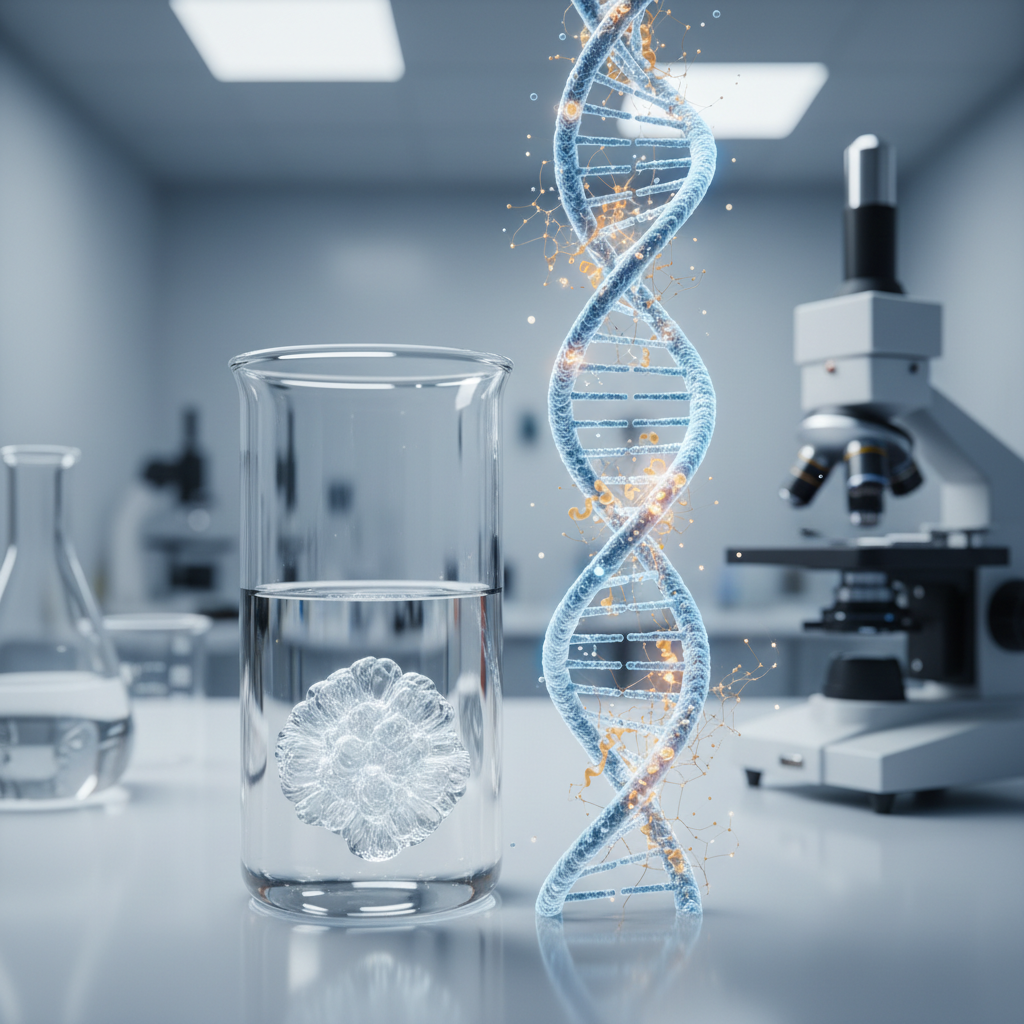
Solution: Advanced biotechnology has finally solved this equation. Through precision fermentation, we can now generate bio-identical, high-efficiency proteins. You can now explore our range of plant-based superfoods and vegan collagen solutions that bridge this gap, offering a product that is molecularly identical to human collagen without a single animal cell involved.
1. What Is Vegan Collagen and How Is It Made?
Vegan collagen is a bio-identical protein synthesized through the genetic engineering of yeast or bacteria, rather than being extracted from the connective tissues of animals. It is not merely a mix of plants, but a structured protein created in a lab.
The Science of Precision Fermentation
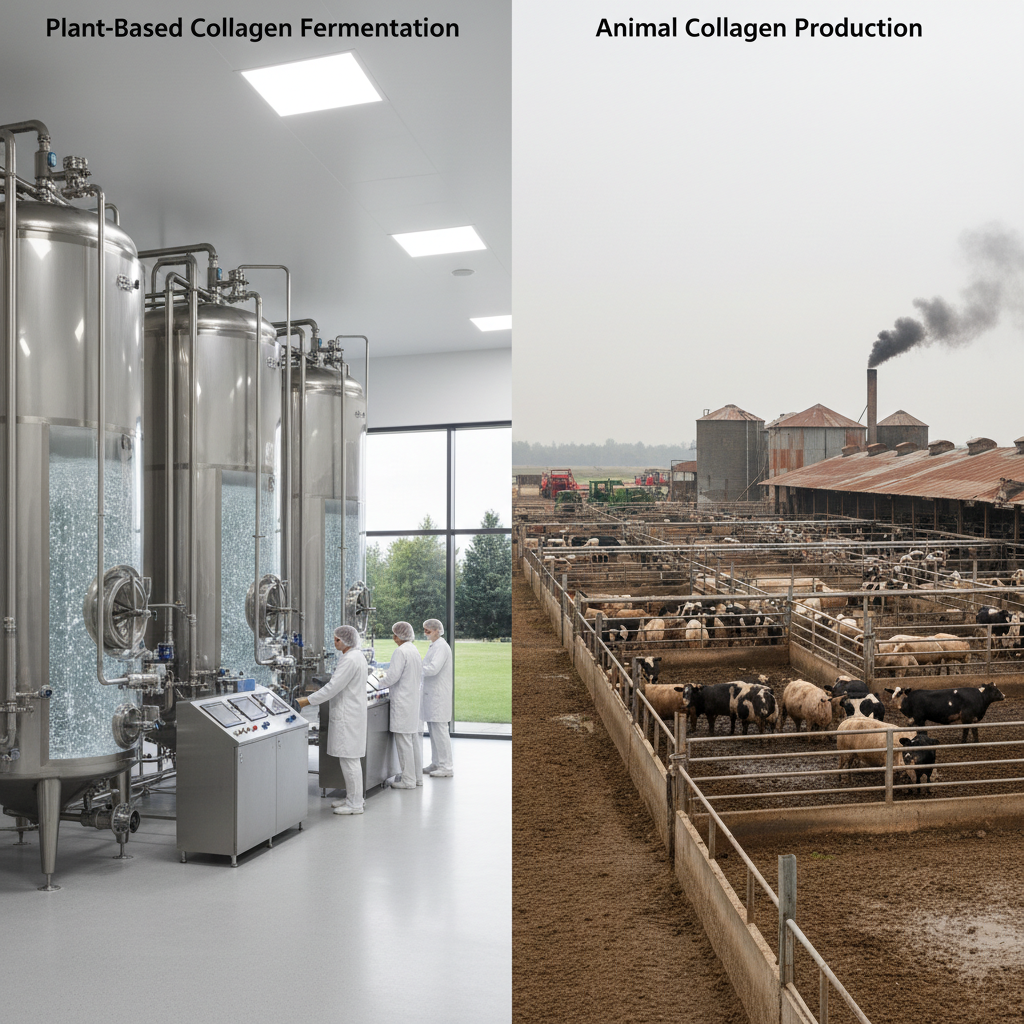
Here is the deal… true vegan collagen is not found in a garden; it is grown in a tank. Scientists use microbial hosts, such as Pichia pastoris bacteria, and program them with the specific genetic code for human collagen. These microbes act as microscopic factories. They consume carbon sources and secrete collagen molecules that match the amino acid sequence of human Type I or Type III collagen perfectly. This process transforms simple sugars into complex structural proteins.
Why Plants Cannot Produce Collagen Naturally
Plants do not have bones, skin, or connective tissue, so they have no biological need to produce collagen. Instead, they rely on cellulose and other fibers for structure.
- Plant fibers are carbohydrate-based, whereas collagen is a protein based on amino acids.
- Traditional “plant collagen” products are actually just “builders” containing vitamins and minerals.
- Bio-identical collagen requires a complex triple-helix structure that plants cannot synthesize on their own.
Creating Bio-Identical Structures
You might be wondering how we replicate the exact triple-helix structure without animal inputs. The answer lies in the post-processing. Once the microbes secrete the pro-collagen, an enzyme (pepsin) is used to trim the molecule into the correct structure. This results in a final product that the human body recognizes instantly.
Analysis: Fermentation offers a scalable, cleaner alternative to hide extraction. The ability to control the exact amino acid sequence means manufacturers can target specific health outcomes, such as skin elasticity or joint lubrication, with higher precision than random animal extraction allows.
| Feature | Animal Extraction | Precision Fermentation | |
|---|---|---|---|
| Input Material | Hides, hooves, scales | Yeast, bacteria, sugar | |
| Purity Control | Low (variable biology) | High (sterile lab) | |
| Production Time | Years (animal growth) | Days (fermentation cycle) | |
| Scalability | Limited by land/livestock | Infinite (add more tanks) |
2. How Does Animal Protein Differ from Vegan Collagen?
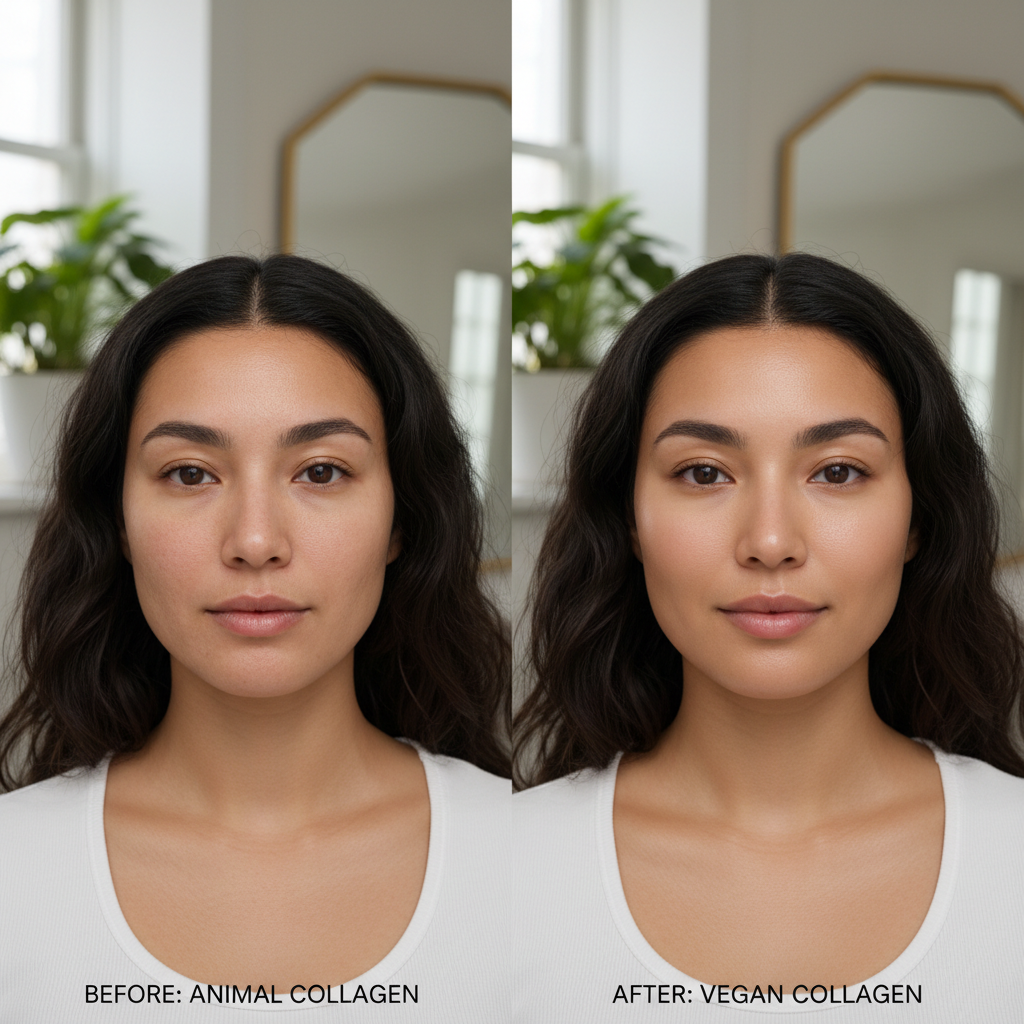
Animal collagen is a complex protein extracted from the slaughter by-products of cows, pigs, or fish, while vegan collagen is a single-molecule protein synthesized to be chemically identical to human structures but free from biological pollutants.
Comparing Bovine Hides and Fish Scales
But there is a catch… animal collagen is inherently inconsistent. Bovine collagen is derived from cow hides which may contain antibiotics or hormones used during farming. Marine collagen, while popular, comes from fish scales and skin, raising concerns about heavy metal contamination from polluted oceans. By switching to engineered sources, you are ensuring quality through responsible microalgae sourcing and protein production that eliminates these environmental toxins completely.
Amino Acid Profiles and Consistency
Animal collagen contains a broad spectrum of amino acids, but the ratio varies depending on the animal’s diet and health.
- Glycine: High in both, but vegan versions can be tuned for exact percentages.
- Proline: Critical for stability, often variable in animal sources.
- Hydroxyproline: Naturally occurring in animals; engineered into vegan strains via enzymatic reactions.
The Allergen Advantage of Non-Animal Sources
You can finally offer a safe option for seafood-allergic consumers. One of the biggest barriers to entry for marine collagen is the high prevalence of shellfish and fish allergies. Bovine collagen also alienates those who avoid beef for religious or dietary reasons. Bio-identical vegan collagen has no such limitations.
Analysis: The safety profile of lab-grown collagen provides a significant competitive edge for premium health brands. It removes the “biological noise” found in animal products, delivering a pure active ingredient that is safe for almost every demographic.
| Safety Metric | Bovine/Marine | Vegan (Fermented) | |
|---|---|---|---|
| Allergen Risk | High (Fish/Shellfish) | Zero | |
| Disease Risk | Potential (BSE/TSE) | None | |
| Heavy Metals | Risk (Mercury/Lead) | None (Controlled Env) | |
| Antibiotics | Common | None |
3. Why Is Vegan Collagen Better for the Planet?
Vegan collagen drastically reduces land use, water consumption, and methane emissions compared to industrial cattle farming, making it the only viable option for a sustainable future.
Reducing Greenhouse Gas Emissions
Let us look at the data. Industrial cattle farming is a primary driver of global warming, contributing significantly to methane emissions. Lab-grown collagen generates up to 96% fewer greenhouse gas emissions because it bypasses the metabolic inefficiencies of raising a 1,000-pound animal just to harvest its skin.
Water Conservation in Production
Agriculture is incredibly thirsty.
- Bovine: Requires thousands of liters of water to grow feed and sustain cattle.
- Marine: Processing requires massive water volumes for cleaning and desalination.
- Vegan: Uses a closed-loop water system in bioreactors, recycling moisture efficiently.
Eliminating Deforestation Risks
Your brand can claim a zero-deforestation supply chain. Cattle ranching is the single largest driver of deforestation in the Amazon. By choosing fermentation, you decouple your revenue from land degradation. This is a powerful narrative for modern consumers who vote with their wallets.
Analysis: Sustainability is no longer just a buzzword but a critical metric for supply chain viability. As carbon taxes and environmental regulations tighten, brands relying on animal agriculture will face rising costs, while those using fermentation will see stable pricing.
| Impact Category | Cattle Farming | Fermentation | |
|---|---|---|---|
| Land Use | High (Grazing + Feed) | Minimal (Vertical Tanks) | |
| Water Use | Very High | Low (Recycled) | |
| Carbon Footprint | High (Methane) | Very Low | |
| Biodiversity Loss | Major Driver | Negligible |
4. Does Vegan Collagen Offer Better Absorption?

Yes, because vegan collagen can be engineered with specific, lower molecular weights for faster uptake into the bloodstream and more targeted delivery to tissues.
The Role of Molecular Weight in Digestion
You might be asking… why size matters. Native collagen molecules are huge (300,000 Daltons) and essentially indigestible. They must be hydrolyzed (broken down) to be absorbed. Animal hydrolysis is a random process, resulting in a soup of various sizes. Precision fermentation allows us to design peptides that are already at the optimal size for absorption (under 5,000 Daltons).
Bio-Availability of Engineered Peptides
- Targeted Uptake: Small peptides pass through the intestinal wall intact.
- Active Sites: Engineered sequences retain the bioactive sites needed to trigger cell repair.
- Synergy: Works perfectly with the combined benefits of Spirulina and Chlorella for a full spectrum of recovery nutrients.
Digestive Ease for Sensitive Systems
You avoid the bloating often associated with heavy animal proteins. Many users report heavy digestion or gastric distress with bovine powders. Because fermented collagen is free from the fats, cellular debris, and heavy chains found in animal products, it is absorbed rapidly with minimal digestive effort.
Analysis: Controlled peptide sizes in vegan formulations solve the bioavailability issues inherent in random animal hydrolysis. This leads to faster visible results for the consumer, which translates to better reviews and repeat purchases.
| Metric | Animal Hydrolysate | Vegan Peptide | |
|---|---|---|---|
| Avg Molecular Weight | 3k – 10k Daltons | < 3k Daltons (Custom) | |
| Uniformity | Low (Random mix) | High (Exact copies) | |
| Digestion Speed | Moderate (1-3 hours) | Fast (30-60 mins) | |
| Bio-Activity | Variable | Optimized |
5. What Nutrients Drive Vegan Collagen Production?
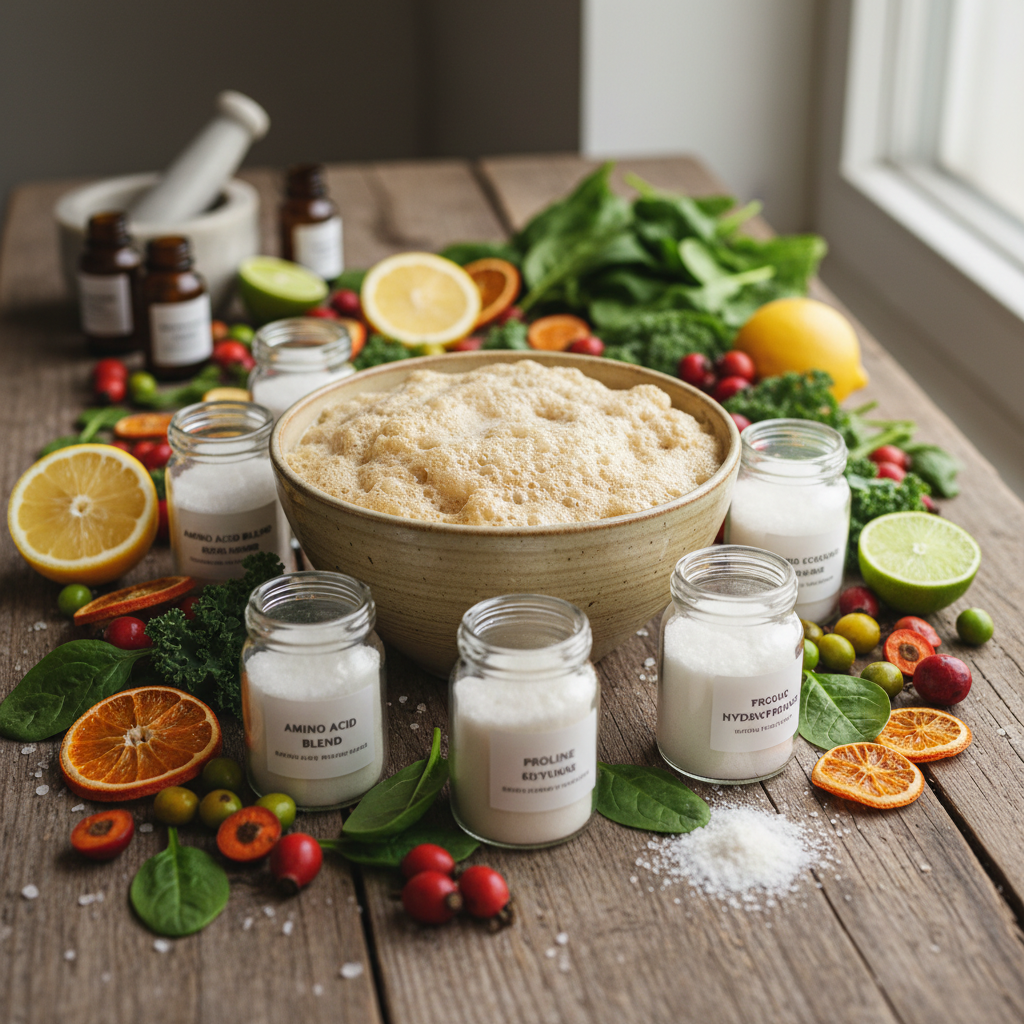
Beyond the protein itself, vegan collagen synthesis requires a precise matrix of Vitamin C, Zinc, and Copper to cross-link amino acids effectively into stable tissues.
The Critical Role of Vitamin C
Ready for the best part? Vitamin C is the “on switch” for collagen production. Without it, your body cannot convert Proline into Hydroxyproline, the amino acid that gives collagen its thermal stability. Even if you ingest pure collagen, a Vitamin C deficiency will halt synthesis. This is why the best vegan formulations always include a high-potency C source like Acerola cherry.
Copper and Zinc as Cofactors
These minerals act as the construction workers at the building site.
- Zinc: Activates enzymes that remove old collagen to make room for new tissue.
- Copper: Essential for the enzyme lysyl oxidase, which cross-links collagen fibers to give them strength.
- Silica: Often sourced from bamboo, it helps organize the collagen matrix.
Synergistic Plant Extracts
You can enhance efficacy by pairing these with your protein base. A robust product doesn’t just supply the bricks (collagen); it supplies the mortar (cofactors). Formulators are now blending fermented peptides with nutrient-dense plant extracts to create a “collagen system” rather than just a protein powder.
Analysis: Formulations that include these cofactors see higher consumer satisfaction due to visible results. A standalone protein is often not enough for older demographics who may also be deficient in absorption-assisting minerals.
| Nutrient | Function in Synthesis | Plant Source | |
|---|---|---|---|
| Vitamin C | Hydroxylation of amino acids | Acerola, Camu Camu | |
| Zinc | DNA repair, protein synthesis | Pumpkin Seeds | |
| Copper | Cross-linking fibers | Cashews, Spirulina | |
| Silica | Structural matrix organization | Bamboo Extract |
6. Can Fermentation Create True Vegan Collagen?

Absolutely. Through precision fermentation, we program microbes to produce vegan collagen that is genetically identical to human Type 21 collagen, offering superior purity.
Programming Yeast and Bacteria
Here is the reality. We are no longer limited to what nature provides. By inserting the specific gene sequence for human collagen into a host yeast like Pichia pastoris, we turn the yeast into a collagen printer. The yeast does not know it is making a human protein; it simply follows the DNA instructions. This allows for the creation of “human” collagen without using any human or animal tissues.
Scalability of Lab-Grown Protein
- High Yield: Bioreactors can run 24/7, independent of weather or seasons.
- Space Efficient: A single facility can produce as much protein as a massive cattle ranch.
- Speed: Production cycles are measured in days, not the years required to raise livestock.
Consistency Batch over Batch
You never have to worry about seasonal fluctuations in raw material quality. In animal farming, the collagen quality depends on the age and health of the animal. In fermentation, every batch is identical. This reliability is critical for brands making specific health claims, such as specific health and wellness benefits of Spirulina for women regarding skin elasticity.
Analysis: Fermentation turns biology into a manufacturing discipline, ensuring identical output every single time. This technology eliminates the supply chain volatility inherent in agriculture-based sourcing.
| Factor | Farming (Animal) | Fermentation (Vegan) | |
|---|---|---|---|
| Consistency | Variable (Biological) | 100% Identical | |
| Supply Chain | Vulnerable to disease/climate | Stable | |
| Regulatory | Complex (Vet checks) | Standard Food Safe | |
| Scale Speed | Slow (Animal lifecycle) | Fast (Microbial growth) |
7. Who Benefits Most from Using Vegan Collagen?
Vegan collagen is ideal for strict vegetarians, people with Kosher/Halal requirements, and those with shellfish allergies, effectively opening the market to millions of previously excluded consumers.
Dietary Restrictions and Ethical Consumers
It gets better… you can now sell to everyone. The plant-based market is no longer niche; it is mainstream. By offering a vegan option, you capture not just vegans, but “flexitarians” and eco-conscious shoppers who are reducing animal intake. This product fits perfectly into Kosher and Halal diets where bovine or porcine sources are often problematic.
Addressing Seafood and Bovine Allergies
- Shellfish Allergy: A major contraindication for marine collagen.
- Mammalian Meat Allergy: Caused by tick bites (Alpha-gal syndrome), making bovine collagen dangerous.
- Sensitive Skin: Those prone to acne often react poorly to the hormones in dairy/beef products.
The Clean Label Movement
You align your brand with the cleanest purity standards available. Modern consumers read labels. They want to see “Non-GMO,” “Cruelty-Free,” and “Sustainable.” Vegan collagen checks every single one of these boxes naturally, whereas animal collagen requires heavy processing to remove its “animal” characteristics.
Analysis: Inclusivity in formulation directly correlates to expanded market share and brand loyalty. By removing the “animal” barrier, you remove the primary reason a consumer would say “no” to your product.
| Market Segment | Pain Point | Vegan Solution | |
|---|---|---|---|
| Vegans | Cannot consume animal products | 100% Animal-Free | |
| Allergy Sufferers | Reaction to fish/beef | Hypoallergenic | |
| Eco-Conscious | Environmental impact | Low Carbon Footprint | |
| Religious | Kosher/Halal restrictions | Compliant by default |
8. Is Vegan Collagen Safer Than Bovine Options?

Vegan collagen removes the risk of Transmissible Spongiform Encephalopathies (TSE) and heavy metals often accumulated in animal tissues, offering a superior safety profile.
Eliminating Zoonotic Disease Risk
Think about this. The supplement industry is still haunted by the specter of Mad Cow Disease (BSE). While regulations are tight, the risk with animal products is never zero. Zoonotic diseases—viruses that jump from animals to humans—are a constant threat in industrial farming. Fermentation occurs in a sterile, controlled environment where viruses cannot survive or replicate.
Heavy Metal Accumulation in Hides
- Bio-accumulation: Animals eat feed that may contain pesticides or heavy metals, which store in their tissues over time.
- Mercury: Fish absorb mercury from the ocean, which concentrates in their skin and scales.
- Purity: Lab-grown collagen is fed a purified carbon source, meaning zero chance of mercury or lead contamination.
Regulatory Compliance and Export
You simplify your global export compliance with animal-free ingredients. Exporting animal products requires navigating a nightmare of veterinary certificates and import bans. Vegan products face far fewer hurdles. It is safer for the consumer and easier for the business, especially when addressing concerns about long-term use of organic spirulina or other algae-based inputs.
Analysis: Safety is not just a health claim; it is a logistical advantage for international supply chains. A product that cannot carry disease is a product that does not get held up at customs.
| Safety Concern | Bovine Source | Vegan Source | |
|---|---|---|---|
| BSE (Mad Cow) | Risk exists | Zero Risk | |
| Viral Vectors | Potential | Sterile | |
| Heavy Metals | Bio-accumulated | None | |
| Import Bans | Common | Rare |
9. How Do We Source High-Quality Vegan Collagen?

Sourcing premium vegan collagen requires validating the fermentation strain and ensuring the absence of solvent residues, distinguishing true protein from simple vitamin blends.
Verifying the Fermentation Strain
But here is the kicker… not all “vegan collagens” are collagen. You must check the source. True bio-identical collagen will list a fermentation source (like P. pastoris) or specific peptide sequences. If the label just lists “Vitamin C, Silica, and Proline,” it is a booster, not actual collagen. The strain matters for yield and structure.
Checking for “Collagens” vs. “Boosters”
- The Trap: Many brands label a bottle “Vegan Collagen” when it contains zero protein.
- The Check: Look for “rh-Collagen” (recombinant human) or “bio-designed collagen” on the spec sheet.
- The Test: Amino acid sequencing should match human Type I or III, not a random plant profile.
Third-Party Testing Protocols
You must demand Certificates of Analysis (CoA) that prove amino acid sequencing. A trustworthy supplier will provide a CoA showing the molecular weight distribution and peptide map. This scientific proof separates the premium ingredient suppliers from the marketing hype.
Analysis: Rigorous vetting of suppliers prevents the reputational damage of selling “fairy dust” products. Brands that educate their customers on the difference between “builders” and “true collagen” build immense trust and authority.
| Check Item | “Booster” Product | True Vegan Collagen | |
|---|---|---|---|
| Main Ingredient | Vitamin C / Silica | Fermented Protein | |
| Protein Content | Near Zero | High (>90%) | |
| Label Claim | “Supports production” | “Bio-identical peptide” | |
| Source | Mixed Plants | Microbial Fermentation |
10. What Is the Verdict on Vegan Collagen Efficiency?

Vegan collagen has matured from a niche concept to a high-performance ingredient that matches or exceeds animal equivalents in specific applications, particularly skincare and recovery.
Matching Functional Benefits
What is the real story? Clinical data on bio-designed collagen shows it can stimulate fibroblast activity just as well as, if not better than, animal collagen. Because it is pure and bio-identical, it triggers the body’s repair mechanisms without the “foreign body” immune response that can sometimes occur with bovine proteins.
The Cost-Benefit Analysis
- Cost: Vegan collagen is currently more expensive per kilo than cheap bovine hide.
- Value: It commands a much higher retail price point and attracts a more loyal, premium customer.
- Brand Equity: The sustainability story offers free marketing value that offsets the raw material cost.
Future-Proofing Your Brand
You position your business as a leader, not a follower. The world is moving away from factory farming. By adopting this technology now, you secure your supply chain against future animal welfare regulations and climate taxes.
Analysis: The shift to animal-free proteins is inevitable; early adopters will capture the most loyal customer base. The initial higher cost is an investment in brand longevity and safety.
| Comparison | Animal Collagen | Vegan Collagen | |
|---|---|---|---|
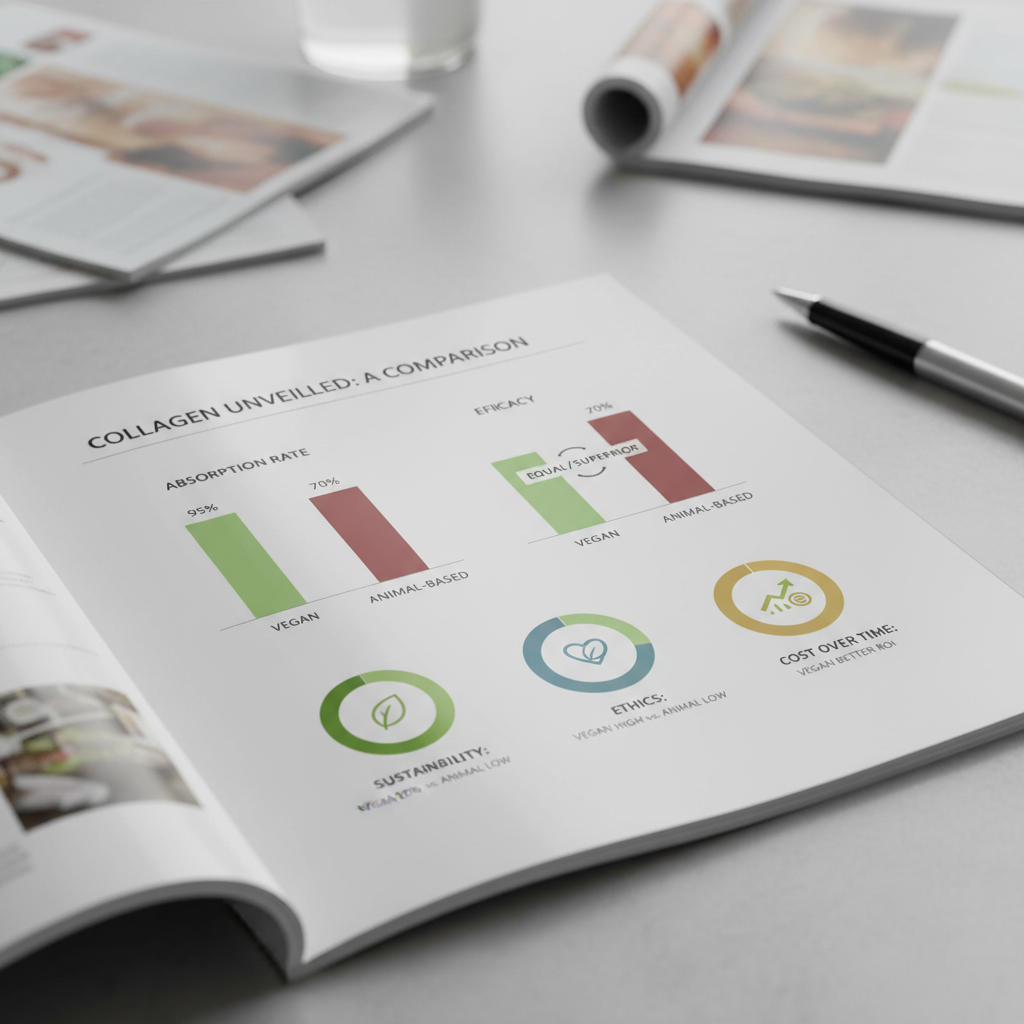
| Efficacy | Proven (Historical) | Proven (Clinical/High Tech) | |
| Ethics | Low | High | |
| Cost | Low | High (Premium) | |
| Future Outlook | Declining | Rapid Growth |
Conclusion
We have established that vegan collagen is no longer just a marketing dream—it is a scientifically validated, sustainable reality that offers safety and purity advantages over animal sources. It solves the ethical dilemma for millions of consumers while delivering the structural protein they crave.
As the market shifts toward ethical consumption, brands that integrate bio-identical plant solutions will define the next decade of the wellness industry. To secure a consistent supply of premium plant-based ingredients for your next formulation, contact us today . We offer the technical expertise to transition your product line into the future.
FAQ
Q1: Can I replace bovine collagen with vegan collagen 1:1?Yes, in most functional applications. Because bio-identical vegan collagen replicates the exact amino acid sequence, it functions identically in the body without the risk of animal allergens.
Q2: What is the main ingredient in vegan collagen?It depends on the type. “True” vegan collagen is made from fermented yeast/bacteria protein, while “boosters” rely on Vitamin C, silica, and plant amino acids to stimulate production.
Q3: Is vegan collagen effective for joint health?Evidence suggests high efficacy. The low molecular weight of engineered peptides allows for deep tissue penetration, supporting cartilage repair effectively.
Q4: How does the cost compare to animal collagen?It is currently a premium ingredient. While upfront costs are higher due to biotechnology, the safety profile and marketing value offer a higher return on investment for premium brands.
Q5: Is vegan collagen safe for pregnant women?Generally considered safer than animal sources. It lacks the heavy metals and hormones often found in industrial livestock, making it a cleaner choice for sensitive groups (always consult a doctor).